
Food Waste

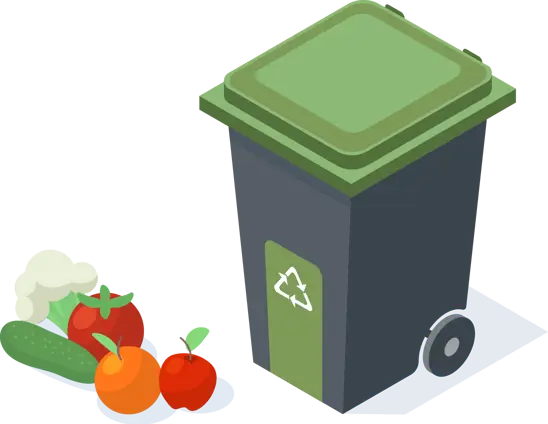
Food Waste Legislation UK
Upcoming legislation is changing the way food waste is managed in the UK. Soon, any commercial organisation that generates food waste will be required to segregate its food waste from its general waste into dedicated food waste bins for collection.
The new regulations state that recycling through anaerobic digestion or composting will be the only approved method for food waste management – completely prohibiting landfill, incineration, or maceration as options.
This initiative aims to minimise waste and maximise recycling efficiency, ultimately lessening environmental impact. In the long term, improved food waste management is expected to reduce overall expenses as the weight of food waste is removed from your general waste bins.
Our Commercial Food Waste Bin Solutions
As food waste breaks down in landfills, it has no access to oxygen and so releases methane – a greenhouse gas 25 times more harmful than CO2. Not only does removing your food waste from general waste help protect the environment but it also costs less to send to an anaerobic digestion plant than to landfills.
At WM101, we have access to an extensive network of food processing facilities across the UK and will work with you to find a local, reliable collection service to suit your food waste bin levels, business, and budget.
Our business waste bins are available in a variety of types and sizes to suit diverse environments, with colour-coding opportunities to enhance food waste bin management.

Commercial Composting Facility
Once your food waste bin has been collected, it can be taken to a commercial composting facility, also known as an industrial composting facility, to be processed alongside other organic waste (paper, wood, leaves, grass trimmings, manure, and food-service packaging made from plants).
Composting is one of the best end-of-life solutions for food waste and aligns with the UK’s legislation. An experienced waste specialist, such as WM101, can help consult on your region’s local composting facilities and collection services, as well as ensure your establishment is set up with the appropriate food waste bins.
Anaerobic Digestion Plant
The most common destination following your food waste bin collection is an anaerobic digestion plant. Here, food waste is broken down by naturally occurring microorganisms in the absence of air (a sealed tank or digester). This can be done singularly or in combination with wastewater biosolids, manure, and other organic waste.
This process releases a “green” form of methane, known as biogas, which can be used to generate renewable heat and power – reducing fossil fuels and greenhouse gas emissions. It can also produce digestate, a nutrient-rich substance used for fertiliser, animal bedding, building materials, or crop irrigation.

WM101 for Commercial Food Waste Bin Management
WM101 is here to help organisations of all sizes realise the potential of their food and organic waste – turning it into incredibly valuable resources for the planet in a way that most suits your needs and budget.
Our expert consultancy service ensures you are equipped with the most cost-effective, efficient, and reliable food waste bin management strategy and your processes align with the UK’s latest regulatory standards.
Why choose WM101?
- Eco-conscious approach
- Tailored recommendations
- Highly experienced waste specialists
- Cost-effective solutions
- Free consultation
- No-obligation quotation
